Abraham K. Cohen: First Jewish Judge in Massachusetts
Abraham K. Cohen (1869–c.1957)
"...to the end that the declaration 'I am an American' shall be synonymous with the words 'I am a believer in and an aggressive advocate of the inherent rights of humanity'." — Abraham K. Cohen, Statement on Fair Employment Practices, c.1945
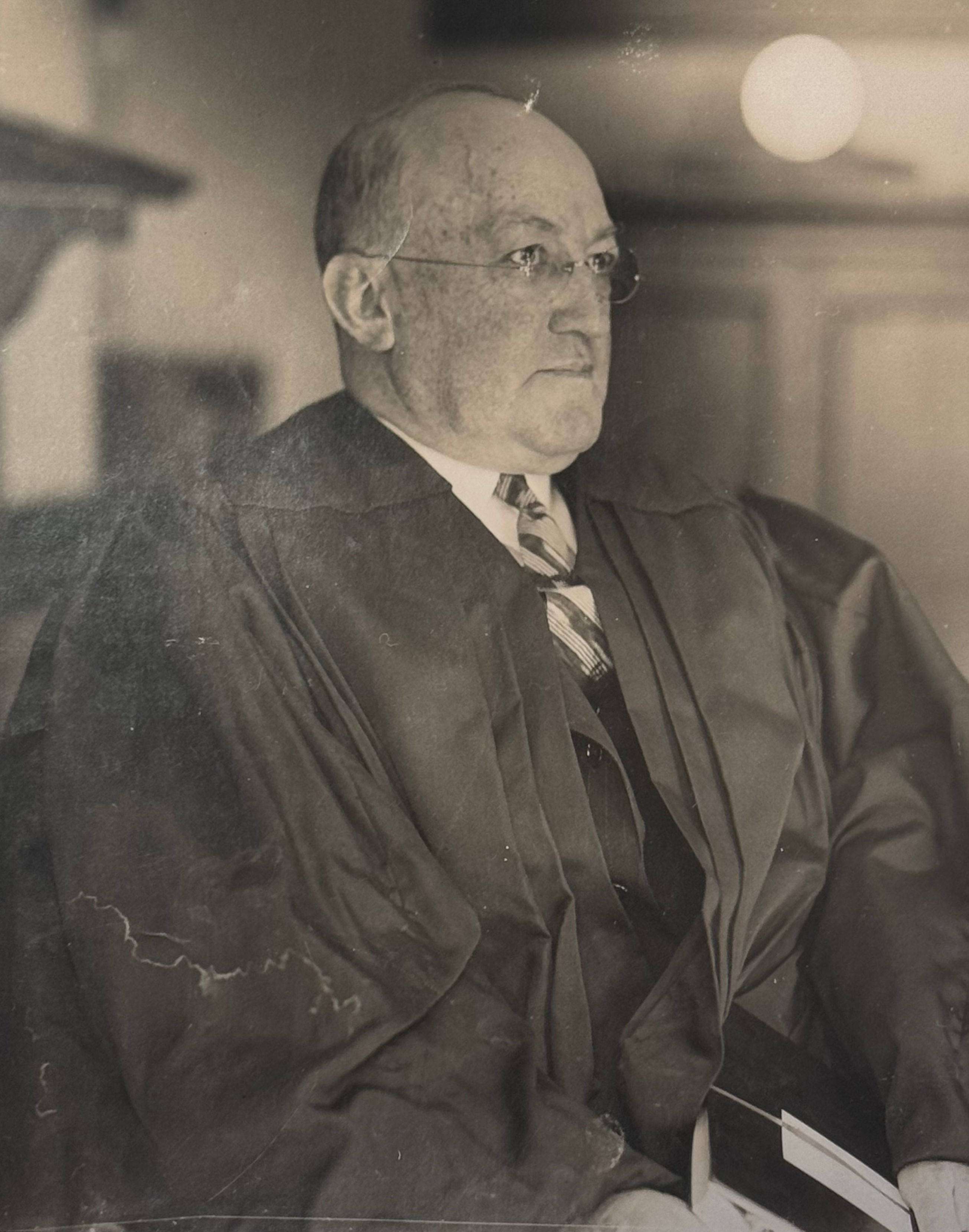
First Jewish Judge in a Massachusetts Court of Record
Special Justice, Municipal Court of Boston (1912-1943+)
Click to open full size
Abraham K. Cohen (November 22, 1869 – c.1957) was a pioneering American jurist, attorney, and Jewish community leader who broke barriers as the first Jewish judge to serve on a court of record in Massachusetts. Over a career spanning more than sixty years, he served as Special Justice of the Municipal Court of Boston, led the Associated Jewish Philanthropies as President, chaired the WWI Draft Appeal Board for Boston, helped codify the General Laws of the Commonwealth of Massachusetts, and emerged as a passionate voice for civil rights and interfaith understanding in post-WWII America.
He was my great-great-grandfather.
The lineage: Abraham K. Cohen → his daughter Selma Cohen → her daughter Sally Anne Bernkopf → her son John B. Frank → me.
A newspaper profile celebrating his 85th birthday captured his central role in Boston civic life:
"Boston is 'The Hub.' For over 60 of his 85 years the hub of the Hub has been... Cohen. For over 40 years Chairman of the Hospital Committee, and now Honorary Chairman, Trustee since 1894." — "Hub of the Hub," c.1954
His legacy extends through his descendants: his granddaughter Sally Bernkopf married Dr. Howard Alvin Frank, the co-developer of the implantable cardiac pacemaker, connecting two remarkable Boston families united by medicine, law, and public service at Beth Israel Hospital.
See also: Original documents and photographs from Abraham K. Cohen's papers
Table of Contents
- Family Origins
- Education
- Legal Career
- Judicial Pioneer: First Jewish Judge in Massachusetts
- World War I Service: Draft Appeal Board
- Civic and Legislative Work
- Philanthropic Leadership
- Civil Rights Advocacy
- Statement on Fair Employment Practices: Full Transcript
- Professional Affiliations
- Personal Life and Family
- The Cohen-Bernkopf-Frank Connection
- Legacy
- Career Timeline
- Primary Source Documents
Family Origins
Parents
Abraham K. Cohen was born on November 22, 1869, in Roxbury, Massachusetts, a neighborhood of Boston that was home to a thriving Jewish community in the late 19th century.
From his 1943 Who's Who entry:
Place of Birth: Roxbury, Massachusetts Father: Simon K. Cohen Mother: Fannie Bennett
| Relationship | Name |
|---|---|
| Father | Simon K. Cohen |
| Mother | Fannie Bennett |
A Life Rooted in Boston
Cohen spent his entire life in the greater Boston area:
"[He] was born in Roxbury, Massachusetts, on November 22, 1869 and has made all of his home life in Boston."
His residences over the decades included:
- Roxbury (birthplace and early years)
- Hotel Lafayette, 333 Commonwealth Avenue, Boston (during active legal/judicial career)
- Brookline, Massachusetts
- Swampscott, Massachusetts (later years)
His office remained at the Tremont Building, 73-79 Tremont Street, Boston throughout his career.
Education
Abraham Cohen's education followed the path of Boston's public school system before entering the legal profession:
"Public Schools of the City of Boston; English High School; studied law in the office of Sprague & Washburn, Boston, Massachusetts."
"Complete elementary education in Brookline schools... attended the college high school in 1889. He formally graduated from Boston University Law School in 1890."
| Institution | Years | Notes |
|---|---|---|
| Boston Public Schools | c.1875-1885 | Elementary education |
| English High School | c.1885-1889 | One of Boston's premier public high schools |
| Office of Sprague & Washburn | c.1889-1890 | Legal apprenticeship under established Boston attorneys |
| Boston University Law School | c.1889-1890 | Graduated 1890 |
Cohen was admitted to the Massachusetts Bar in July 1894 at age 24.
Legal Career
Law Practice
After admission to the bar, Cohen established himself as a practicing attorney in Boston:
Abraham K. Cohen Attorney at Law - Member of firm of A. K. Cohen-Max E. Bernkopf 1125 Tremont Building, Boston, Massachusetts
The firm A. K. Cohen - Max E. Bernkopf, Attorneys at Law represented a partnership between Cohen and his son-in-law. A biographical entry for Max Bernkopf describes the firm:
"...now senior member of the firm of A. K. Cohen - Max E. Bernkopf, Attorneys at Law, the firm consisting of A. K. Cohen, Max A. Bernkopf, Alton H. Grausman and Sylvan A. Goodman."
Legal Scholarship
Cohen contributed to legal literature throughout his career, writing "many articles for law magazines on general law questions."
Business Directorships
Beyond his law practice, Cohen served on corporate boards:
- Economy Grocery Stores Corporation (Director)
- Leopold Morse Company (Director)
- Director of a Bank (name unspecified in documents)
Teaching
Cohen also served as a lecturer at Boston University Law School.
Judicial Pioneer: First Jewish Judge in Massachusetts
Abraham K. Cohen's most historic achievement was becoming the first Jewish judge to serve on a court of record in the Commonwealth of Massachusetts.
The Historical Record
A document in the collection explicitly establishes this milestone:
First Jewish Judge in a Court of Record in the State
Roxbury District Court - March 12, 1907 Curtis Guild, Jr.
Municipal Court Suffolk - October 16, 1912 Eugene Foss
Judge Philip Rubenstein appointed in 1906 to the Juvenile Court but that is for children and is not a court of record.
— Historical notes
This document carefully distinguishes Cohen's appointment from that of Judge Philip Rubenstein, who was appointed to Juvenile Court in 1906. The Juvenile Court, being a specialized tribunal for children, was not considered a "court of record"—a court whose proceedings are officially documented and whose decisions carry precedential weight.
Roxbury District Court Appointment (1907)
| Detail | Information |
|---|---|
| Court | Roxbury District Court |
| Position | Special Justice |
| Date Appointed | March 12, 1907 |
| Appointing Governor | Curtis Guild, Jr. |
| Historical Significance | First Jewish Judge in a Court of Record in Massachusetts |
Governor Curtis Guild, Jr. (1860-1915), a progressive Republican, made this historic appointment. Guild was known for making groundbreaking judicial appointments during his tenure (1906-1909), including "the state's first Italian-American judges, as well as two Jewish judges, and an African-American court clerk."
Municipal Court of Boston Appointment (1912)
Cohen's own account of his judicial career:
"Appointed in March, 1907 as Special Justice of the Municipal Court of the Roxbury District of Boston and there served until 1912, resigning to accept appointment in October, 1912, of Special Justice of the Municipal Court of the City of Boston which position is still held..." — Who's Who entry, 1943
| Detail | Information |
|---|---|
| Court | Municipal Court of the City of Boston |
| Position | Special Justice |
| Date Appointed | October 16, 1912 |
| Appointing Governor | Eugene Foss |
| Years of Service | 1912 – at least 1943 (31+ years documented) |
The 1943 Who's Who entry confirms that Cohen's position "is still held" as of that date, indicating more than three decades of continuous judicial service.
Length of Service
A biographical document emphasizes the extraordinary duration of his judicial tenure:
"He has presided over its private matters at his present... has the award of several justice of the District Court of the City of Boston. Boston, the for twenty years. Thereafter as the Judge of Courts..." — Biographical document
World War I Service: Draft Appeal Board
During World War I, Cohen was appointed to a critical role in the Selective Service System. His Who's Who entry describes this service:
"...World War I, was Chairman of District Board #4 of the Commonwealth of Massachusetts, being the so-called Draft Appeal Board covering the local boards of the City of Boston." — Who's Who entry, 1943
Another document elaborates on the scope of this responsibility:
"...he was Chairman of the [Draft Appeal Board] of the District Service Act, having jurisdiction over the 27 local boards of the Massachusetts Service." — Biographical document
| Position | Chairman, District Board #4 |
|---|---|
| Jurisdiction | City of Boston |
| Scope | 27 local draft boards |
| Years | 1917-1918 |
| Function | Draft Appeal Board |
The "Boston Code"
One newspaper clipping credits Cohen with helping develop standardized Selective Service procedures:
"Service Chairman... he was Selectee over 25 [or 27] local boards in Boston, and is one of the authors of a Code which is considered a model for state government." — "Hub of the Hub" newspaper article
Civic and Legislative Work
Commissioner to Consolidate Massachusetts Laws (1919-1921)
Following World War I, Cohen was appointed to one of the most significant legislative projects in Massachusetts history:
"...one of the Commissioners to Consolidate and Arrange the Statutes of the Commonwealth of Massachusetts in 1919..." — Who's Who entry, 1943
Another document describes the outcome:
"He was appointed by the Governor of Massachusetts to sit on the Committee of Massachusetts, formulating what are now called the General Laws of the Commonwealth." — Biographical document
| Position | Commissioner |
|---|---|
| Commission | Commission to Consolidate and Arrange the Statutes of the Commonwealth of Massachusetts |
| Established | Chapter 43 of the Resolves of 1916 |
| Active Years | 1919-1921 |
| Achievement | Codification of the General Laws of the Commonwealth (1921) |
This commission was established under Chapter 43 of the Resolves of 1916 and published a preliminary report in 1918. The commissioners could consolidate laws and make stylistic changes but were specifically instructed not to change the substance of the laws they were codifying. The 1921 codification was the last full recodification in Massachusetts history—after which the state moved to a continuous consolidation system that remains in use today. The General Laws of the Commonwealth remain the foundational statutory framework of Massachusetts law.
Citizens' Flood Relief Committee (1947)
Even in his late seventies, Cohen continued active civic service:
"Mr. Cohen is a citizen of Boston in the sense of religion, he participated in the affairs of his city. In 1947 he was made chairman of Citizens' Flood Relief Committee." — Biographical document
Additional Civic Roles
From various biographical documents:
- Boston Civic Committee — Elected member
- Massachusetts Civic League — Councilor
- League of Women Voters — Appointed Councilor
Philanthropic Leadership
Abraham Cohen devoted more than sixty years to Jewish philanthropic organizations in Boston. The "Hub of the Hub" article captures the remarkable duration of this service:
"For over 60 of his 85 years the hub of the Hub has been... Cohen. For over 40 years Chairman of the Hospital Committee, and now Honorary Chairman, Trustee since 1894." — Newspaper article, c.1954
Beth Israel Hospital (1894-1957)
Cohen's association with Beth Israel Hospital began the same year he was admitted to the bar and continued for over six decades:
"Judge Cohen has been engaged in charitable work... to such organizations as the Beth Israel Hospital, the latter as First Vice-President from the death of its Incorporation in 1880, until 1945... He was elected President in April, 1945, and served as such for many years. He has been... Honorary President for Life." — Biographical document
| Role | Years |
|---|---|
| Trustee | 1894 – c.1957 (60+ years) |
| Chairman, Hospital Committee | 40+ years |
| First Vice-President | Multiple terms, until 1945 |
| President | Elected April 1945 |
| Honorary President for Life | Conferred on 88th birthday (1957) |
The "Hub of the Hub" article notes:
"At 85, Trustee Cohen has diverted himself. Recently he resigned as Association of Associated Jewish Philanthropies of Greater Massachusetts Commission of the Beth Israel Hospital Association on his 88th birthday. He is Honorary [President for Life] on his 88th birthday. He is continuing his efforts in our behalf." — Newspaper article
Associated Jewish Philanthropies
Cohen rose to lead one of the largest Jewish federated charitable organizations in America:
"President of the Associated Jewish Philanthropies of Boston." — Biographical entry
"First Vice-President and Member of Board of Directors of Associated Jewish Philanthropies, Inc. of Boston" — Biographical document
Federated Jewish Charities of Boston
"President and Member of Board of Directors of Federated Jewish Charities of Boston" — Biographical document
Greater Boston Community Fund
Cohen also served non-sectarian charitable organizations:
"He has been connected with the Greater Boston Community Fund as director since it began its work, and has served there as director." — Biographical document
Temple Israel, Boston
"For many years, he was a member of the Council of Trustees of Temple Israel, and was elected as Honorary President in January, 1949." — Biographical document
Civil Rights Advocacy
Cohen emerged as a significant voice for civil rights, interfaith understanding, and opposition to antisemitism and fascism.
Massachusetts Committee of National Conference of Christians and Jews
From his Who's Who entry:
"President of Associated Jewish Philanthropies, Inc.; member of Executive Committee of Massachusetts Committee of National Conference of Christians and Jews; Managing Trustee of Trustees of English High School Association; Trustee of Temple Israel, Boston." — Who's Who document
Governor's Committee for Racial and Religious Understanding
Cohen worked closely with this governmental body, as he describes in his own words:
"The Governor's Committee for Racial and Religious Understanding of which Dr. Julius S. Warren, State Commissioner of Education, is Chairman and with which committee this Massachusetts Committee Catholics, Protestants and Jews closely cooperates..." — Statement on Fair Employment Practices
Anti-Defamation League
Cohen served the ADL for more than three decades:
"...Commissioner for the Eastern District of the Anti-Defamation League for more than 30 years." — "Hub of the Hub" article
Massachusetts Fair Employment Practice Commission
"...member of Organizations Massachusetts Fair Employment Practice Commission." — Newspaper clipping
Statement on Fair Employment Practices: Full Transcript
Among the most significant documents in this collection is a four-page typed statement Cohen delivered at a racial relations event in the mid-1940s. This speech provides direct insight into his philosophy on civil rights, democracy, and the fight against fascism.
The document bears the notation "AKC/A" (Abraham K. Cohen's initials) and references approval by a "Racial Relations" committee with a date in January 194[?].
See also: View original handwritten and typed documents
Full Transcript
[PAGE 1]
This citation is accepted by me in all humility and with deep appreciation that it has been worthwhile. I hope that whatever may be done, particularly at this time, to stimulate any sense of fellowship and good will which is absolutely necessary for the preservation of our democracy.
It has been said by many that the [goal] for a common bond of fellowship [is both] gentleman[ly] and inspirational. But to one who, by [long] standing, brings [together] all the resulting numerous different groups and [knows] that therefore nothing, I fully realize, [can come easily] in the direction of lasting [change], the difficulties that all [must overcome] to [achieve] any [measure] of a perfect attainment of the goals we seek [may never] be reached, [but] if some degree of success may be [achieved by] enough people of good will and with vigorous efforts, [that is enough]. Then too the [struggle for] mental and spiritual endeavor [must] be pursued.
The Governor's Committee for Racial and Religious Understanding of which Dr. Julius S. Warren, State Commissioner of Education, is Chairman and with which committee this Massachusetts Committee [of] Catholics, Protestants and Jews closely
[PAGE 2]
cooperates, is very firmly of the opinion that to build for a permanent future of mutual understanding there should be a thorough plan of inter-cultural education of adults and more particularly of children beginning with their earliest years when impressions made in their minds in the formative period... [ensure] that the rights of all... will be preserved irrespective of race, religion, or [creed and] shall be observed.
We would not for one moment question the Bill of Rights guaranteed by our Constitution, and the Bill of Rights. But what is "freedom" — it is no absolute [right]. There are simply limitations to some rights, [when they conflict with other] interests.
There is pending in our Legislature what has been loosely termed an anti-discrimination bill which [provides that] it is not intended to interfere with [individual] rights [but that] there shall be no [discrimination in] employment [based] on religion, color, or race. Among other [provisions], this bill now agreed upon by proponents for consideration by the proper legislative committee provides
[PAGE 3]
for a thorough study, by the commission to be appointed under the bill, of all of these matters pertaining to such legislation as proposed. If this legislation is enacted and if this commission to be provided is [properly constituted] and [the] problem[s] presented will be carefully [considered], [it will] probably [be] far more beneficial than [doing nothing]... [the] laws will [improve any] condition [that is] unsatisfactory...
Cases of these have been brought [to light] in the operation by our Governor's Committee, as a result of the bitter philosophy of Hitlerism which we have known [—] those denunciations of the millions of persons [that] include not only Jews [but] hundreds of thousands of Catholics, Protestants, men and children [and] persons... of every religious faith.
Such horrors must never be permitted to take place in this country.
All of us [here] this evening should dedicate ourselves to the task
[PAGE 4]
of overcoming the subversive activities of Moran, of Gerald Smith, of Joseph McWilliams and of Pelloy, and of all other advocates of divisive policies — to the end that the declaration "I am an American" shall be synonymous with the words "I am a believer in and an aggressive advocate of the inherent rights of humanity".
AKC/A
Herein contained [...] Approved [...] at the [...] Racial Relations on date of January [...], 194[?]
Yours very truly,
Historical Context: The American Fascists Cohen Named
Cohen specifically called out several prominent American fascists and antisemites active in the 1940s:
- Gerald L.K. Smith (1898-1976) — Founder of the America First Party; publisher of The Cross and the Flag; notorious antisemitic demagogue
- Joseph McWilliams (1904-1966) — Leader of the Christian Mobilizers; dubbed "Joe McNazi" by the press
- William Dudley Pelley (1890-1965) — Founder of the Silver Legion of America ("Silver Shirts"), an American fascist organization modeled on Nazi Brownshirts
- Moran — Likely a reference to a local figure in the antisemitic movement
Cohen's willingness to name these figures publicly—and to explicitly connect their ideology to "the bitter philosophy of Hitlerism"—demonstrates remarkable moral courage in the immediate post-war period.
Professional Affiliations
Bar Associations
From the Who's Who documents:
"American Bar Association; Massachusetts Bar Association; Bar Association of the City of Boston." — Who's Who entry
| Organization | Status |
|---|---|
| American Bar Association | Member |
| Massachusetts Bar Association | Member |
| Bar Association of the City of Boston | Member; Trustee |
Educational Organizations
- English High School Association — Managing Trustee (many years)
- Endowment Funds of English High School — Trustee
Fraternal Organizations
Cohen held leadership positions in B'nai B'rith, the oldest Jewish fraternal organization in America. In February 1915, at the sixty-third annual convention of District 1 I.O.B.B. in Worcester, Massachusetts, he was elected First Vice President of the district.
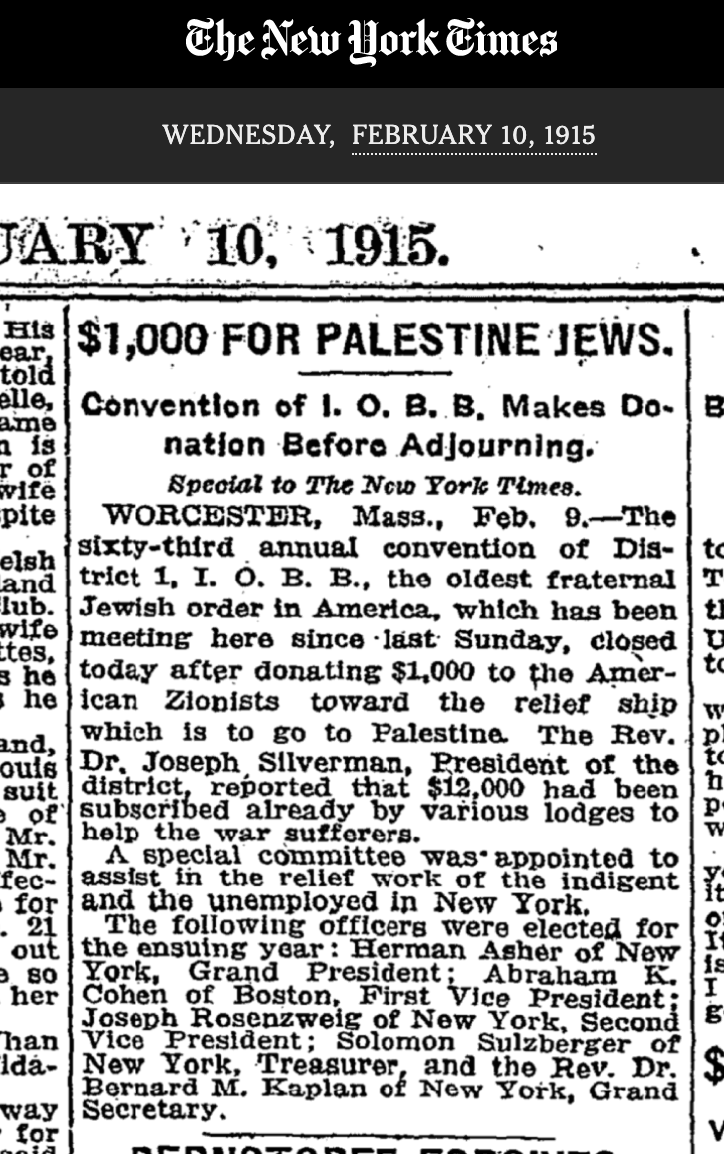
From The New York Times, February 10, 1915:
WORCESTER, Mass., Feb. 9.—The sixty-third annual convention of District 1. I. O. B. B., the oldest fraternal Jewish order in America, which has been meeting here since last Sunday, closed today after donating $1,000 to the American Zionists toward the relief ship which is to go to Palestine. The Rev. Dr. Joseph Silverman, President of the district, reported that $12,000 had been subscribed already by various lodges to help the war sufferers. A special committee was appointed to assist in the relief work of the indigent and the unemployed in New York. The following officers were elected for the ensuing year: Herman Asher of New York, Grand President; Abraham K. Cohen of Boston, First Vice President; Joseph Rosenzweig of New York, Second Vice President; Solomon Sulzberger of New York, Treasurer, and the Rev. Dr. Bernard M. Kaplan of New York, Grand Secretary.
Additional affiliations from the American Jewish Congress form: Givril, B'nai B'rith Ado. A. Unit, Free Sons of Israel.
Social Clubs
- Kernwood Country Club
Personal Life and Family
Marriage
"Married June 19, 1894 to Sadie Rosnosky, of Boston; one child, of said marriage, Selma C. Bernkopf, wife of Max E. Bernkopf, of Boston."
| Detail | Information |
|---|---|
| Spouse | Sadie Rosnosky |
| Marriage Date | June 1894 |
| Marriage Location | Boston, Massachusetts |
| Duration | 60+ years |
Sadie Rosnosky was the daughter of Isaac Rosnosky, the first Jewish person elected to public office in Boston.
Children
Abraham and Sadie Cohen had one daughter:
| Name | Spouse | Notes |
|---|---|---|
| Selma Cohen Bernkopf | Max E. Bernkopf | Law partner's wife; mother of Sally Bernkopf Frank |
Grandchildren
| Name | Parents | Later Spouse | Notable Achievement |
|---|---|---|---|
| Sally Bernkopf | Max & Selma Bernkopf | Dr. Howard Alvin Frank | Grant Administrator, Children's Hospital/Beth Israel; Afghan Hound champion breeder |
Residences
Later in life, Cohen resided in Swampscott, Massachusetts. Earlier addresses included the Hotel Lafayette, 333 Commonwealth Ave., Boston.
The Cohen-Bernkopf-Frank Connection
The intertwining of the Cohen, Bernkopf, and Frank families represents a remarkable convergence of Boston's legal and medical elite, centered on Beth Israel Hospital.
The Law Firm Partnership
Abraham K. Cohen and Max E. Bernkopf formed a law partnership that united father-in-law and son-in-law. The firm biography states:
"...the firm of A. K. Cohen - Max E. Bernkopf, Attorneys at Law, the firm consisting of A. K. Cohen, Max A. Bernkopf, Alton H. Grausman and Sylvan A. Goodman. Director of Economy Grocery Stores Corporation and Leopold Morse Company; managing trustee of the English High School Association..." — Biographical document
The Family Tree
Abraham K. Cohen (1869-c.1957) ─┬─ Sadie Rosnosky (m. 1894)
   Judge, Philanthropist         │     daughter of Isaac Rosnosky
                                 │
                                 └── Selma Cohen ─────────┬─ Max E. Bernkopf
                                                          │  Attorney, Law Partner
                                                          │
                                                          └── Sally Bernkopf ─────┬─ Dr. Howard Alvin Frank
                                                              (1922-2015)          │  Pacemaker Co-Developer
                                                                                   │
                                                                   ┌───────────────┼───────────────┐
                                                                   │               │               │
                                                               Anne Greene    Edward Frank II   John Frank
                                                               (1948-2025)
                                                               Prof. of English
                                                               Wesleyan Univ.
The Beth Israel Hospital Connection
Both the Cohen and Frank families were deeply connected to Beth Israel Hospital across generations:
| Family Member | Beth Israel Role |
|---|---|
| Abraham K. Cohen | Trustee (60+ years), President, Honorary President for Life |
| Max E. Bernkopf | Prominent attorney; patient of Dr. Howard Frank |
| Sally Bernkopf Frank | Grant Administrator, Beth Israel Hospital |
| Dr. Howard A. Frank | Attending Surgeon (62 years), Clinical Professor |
| Dr. Edward D. Frank | Head of Peripheral Vascular Surgery |
The Romance
According to Sally Frank's obituary, she met her husband through a patient-physician relationship: "Following her graduation from Smith College, Sally married 'her father's surgeon.'" Max Bernkopf was a patient of Dr. Howard Frank, and through this connection, Howard met his future wife—the granddaughter of the hospital's Honorary President for Life.
Legacy
Judicial Pioneer
Abraham K. Cohen's 1907 appointment as the first Jewish judge in a Massachusetts court of record opened doors for generations of Jewish jurists who followed. His more than three decades on the Municipal Court of Boston demonstrated that merit, not religion, should determine judicial appointment.
Philanthropic Institution Builder
Cohen's sixty-plus years of service to Beth Israel Hospital helped build it into one of Boston's premier medical institutions—the same hospital where his granddaughter's husband would help develop the pacemaker and where his great-granddaughter-in-law would work. His leadership of the Associated Jewish Philanthropies strengthened the organizational infrastructure of Boston's Jewish community.
Civil Rights Voice
Cohen's post-war advocacy for fair employment practices and interfaith understanding positioned him among the early voices for what would become the civil rights movement. His explicit condemnation of American fascists—naming Gerald L.K. Smith, Joseph McWilliams, and William Dudley Pelley—and his call for anti-discrimination legislation were progressive positions for the 1940s.
His words remain resonant:
"Such horrors must never be permitted to take place in this country. All of us... should dedicate ourselves to the task of overcoming the subversive activities of [those who advocate] divisive policies — to the end that the declaration 'I am an American' shall be synonymous with the words 'I am a believer in and an aggressive advocate of the inherent rights of humanity'."
Recognition in His Lifetime
Cohen received multiple honors during his long life:
- Inclusion in Who's Who Among American Jewry (1926, 1938, 1944)
- Inclusion in Who's Who in the Western Hemisphere (1943)
- American Jewish Congress biographical recognition
- American Jewish Cyclopedia solicitation (1942)
- "Hub of the Hub" tribute at age 85
- Honorary President for Life, Beth Israel Hospital (age 88, 1957)
- Honorary President, Temple Israel (1949)
Career Timeline
| Year | Event |
|---|---|
| 1869 | Born November 22, Roxbury, Massachusetts |
| c.1889 | Graduated English High School |
| c.1890 | Graduated Boston University Law School |
| 1894 | Admitted to Massachusetts Bar (July) |
| 1894 | Married Sadie Rosnosky (June) |
| 1894 | Became Trustee, Beth Israel Hospital |
| c.1895 | Daughter Selma born |
| 1907 | Appointed Special Justice, Roxbury District Court (March 12) — First Jewish Judge in a Court of Record in Massachusetts |
| 1912 | Appointed Special Justice, Municipal Court of Boston (October 16) |
| 1917-1918 | Chairman, District Board #4 (WWI Draft Appeal Board) |
| 1919-1921 | Commissioner to Consolidate the General Laws of Massachusetts |
| c.1920s | First Vice-President, Associated Jewish Philanthropies |
| 1926 | First inclusion in Who's Who Among American Jewry |
| 1934 | Biographical entry published |
| 1938 | Who's Who in American Jewry solicitation |
| 1942 | Solicited for American Jewish Cyclopedia |
| 1943 | Multiple Who's Who entries; 31+ years on Municipal Court |
| 1945 | Elected President, Beth Israel Hospital |
| c.1945 | Delivered Statement on Fair Employment Practices |
| 1947 | Chairman, Citizens' Flood Relief Committee |
| 1949 | Honorary President, Temple Israel |
| c.1954 | "Hub of the Hub" profile at age 85 |
| 1957 | Honorary President for Life, Beth Israel Hospital (88th birthday) |
| c.1957 | Death (per FamilySearch) |
Primary Source Documents
This biography was compiled from 28 primary source documents from the Abraham K. Cohen papers, including biographical forms, Who's Who entries, newspaper clippings, and his civil rights speech.
View all original documents and photographs
Document Categories
Newspaper Articles and Clippings
- "Hub of the Hub" — Profile celebrating Cohen at age 85 (c.1954)
- NIH Joy Fund newspaper clipping
Who's Who and Biographical Registry Materials
- Who's Who Among American Jewry — Invitation letter (Sept 21, 1926)
- South American Association Executives (Sept 13, 1934)
- Who's Who in American Jewry — Request letter (Apr 2, 1938)
- American Jewish Cyclopedia / Cosmopolitan Press (Sept 18, 1942)
- Who's Who in Western Hemisphere — Completed entry (Sept 14, 1943)
- Who's Who in American Jewry 1944 — Affiliations + letter (c.1943)
- Who's Who in Western Hemisphere — Alternate entry (Nov 20, 1943)
- American Jewish Congress — Biographical form (undated)
Extended Biographical Documents
- Four-page biography covering birth, judicial appointments, Beth Israel Hospital, board memberships, education, and civic roles
- Multiple biographical summaries from various periods
Historical Notes
- Document establishing Cohen as "First Jewish Judge in a Court of Record in the State"
- Max E. Bernkopf biography
Statement on Fair Employment Practices (c.1945)
- Four-page typed speech on civil rights, anti-discrimination legislation, and opposition to American fascism
Membership and Affiliation Lists
- Bar associations, Kernwood Country Club, WWI service records
Document Information
| Field | Value |
|---|---|
| Subject | Abraham K. Cohen (1869–c.1957) |
| Author | Peter Frank (great-great-grandson) |
| Version | 2.1 |
| Last Updated | January 15, 2026 |
| Research Method | Researched, compiled, and drafted using ChatGPT Deep Research and additional AI-based research agents, with human curation and editing. Sources include OCR transcriptions of 28 primary documents from family papers (c.1926-1954). |
| Word Count | ~6,000 words |
| Original Documents | View archive |
Acknowledgments
This biography was compiled from OCR transcriptions of primary source documents in the Abraham K. Cohen papers, preserved family papers spanning 1926-1954.
The connection between the Cohen family and the Frank family was documented in the biography of Dr. Howard Alvin Frank, which notes that Abraham K. Cohen was the "First Jewish judge in Massachusetts" and Sally Frank's maternal grandfather.
"...to the end that the declaration 'I am an American' shall be synonymous with the words 'I am a believer in and an aggressive advocate of the inherent rights of humanity'."
— Abraham K. Cohen, c.1945